

Beethoven’s 9th – SB Newspress Review
Saturday’s gala opening concert of the Music Academy of the West orchestra took on Beethoven’s Ninth, from two angles
By Josef Woodard, News-Press Correspondent

Alien-themed Summer Solstice paraders and partakers may well have noticed the eye-catching feature on the Granada Theatre marquee along the parade route, promising that pillar of western civilization, Beethoven’s Ninth – the featured, and boldly-delivered fare of the Music Academy of the West’s gala opening orchestra concert. True lovers and casual snackers of classical music can’t help but gravitate back to this landmark work, even after possibly many exposures to the Ninth, and to the “Ode to Joy” theme, which still waxes profound even after being reduced to jingle-duty in car commercials.June 26, 2015 12:00 AM
Overheard in the bathroom before the concert: “I can pretty much guarantee that after the concert, people will be humming ‘Ode to Joy” in the bathroom.” I didn’t test his theory, but I did join the Granada throng in once again appreciating the glories of Beethoven’s symphonic opus, brought impressively to life by the old-soul prowess of another “brand new” Festival Orchestra of young Academy “fellows,” tautly guided by maestro Larry Rachleff.
For this Ninth meeting, however, the programmatic plot was thicker than usual and more than just a joyous grand opening strategy, in part because of the lingering sadness over the tragic church shooting in the AME sanctuary in Charleston, S.C. Mr. Rachleff introduced the symphony by dedicating the performance to Charleston, alluding to the symphony, and especially its final, choral-fortified movement, as “one of the greatest testament to hope and joy of the human condition.”
From another angle, the challenges of fully embracing joy in turbulent times is also an undercurrent in the concert’s intriguing opening, the brief “Ode” by Mason Bates. Written in the hope-challenged year of 2001, the piece finds the composer reworking the ever-familiar “Ode to Joy” theme, broken into fragments that filter through the post-Modern orchestration.
Once the Ninth commenced at the Granada, we were treated to yet another uncommonly fine orchestral weave and ensemble sound from an orchestra performing publically together for the first time, and which will dissipate in six weeks.

In a rare collaboration between Music Academy of the West forces and a Santa Barbara-based classical institution, the Santa Barbara Choral Society, directed by JoAnne Wasserman, was on hand to up the stage population and sonic dimensions in the climactic finale. Up front, the vocal soloists from the much-lauded vocal program of the Academy – soprano Dru Daniels, mezzo soprano Emily Rose Lezin, tenor Kevin Kyle and baritone Ryan Thorn – seized the spotlight, on lyrical themes displayed in English on supertitles, such as “all mankind become brothers, in the haven of Your wings!” Words of wisdom and hopeful comfort, in a dark week in America.
It may be hard to fully absorb this joy-based anthem in the wake of what happened in Charleston last week, for instance, except inasmuch as the stubborn desire for hope and joy springs eternal. That may be the underlying message of Beethoven’s masterpiece, brought home again in the aftermath of Solstice.
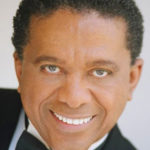 American baritone, Ralph Cato has travelled the world extensively, telling stories in song with his warm, clarion baritone voice.
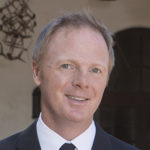 Tenor, Benjamin Brecher has performed over fifty operatic roles with many of the world’s most prestigious opera companies, specializing in the high lying lyric tenor repertoire. He has performed 16 roles with New York City Opera alone. Career highlights include performances with Opera Orchestra of New York, L’Opera de Nice, Rossini Opera Festival in Pesaro, L’Opera de Montreal, Santa Fe Opera, Opera Theatre of St. Louis, among many others. His orchestral solo repertoire includes Mozart, Handel, Orff, Bach, Haydn, as well as many performances of Britten. In 2000 he began performing the great Irish Tenor songs in a concert produced for him entitled A Celtic Celebration, Twenty years later, the show has become a North American hit with performances with 45 Symphonies in North America. Ben continues his discography having added his twelfth recording in 2016 Forgotten Liszt, with pianist Robert Koenig, and will record a new release in 2022 entitled “Three Centuries of Thomas Moore” including the music of Britten, Berlioz, and Sarah Gibson on MSR Classics. He is a Professor of Voice at University of California Santa Barbara, where he has served as the Head of Voice.
 Tracy Van Fleet is pleased to return to the Santa Barbara Choral Society. As a soloist, she has performed with the Los Angeles Master Chorale, Lüneburg Symphony in Germany, Orquesta Filarmónica de Boca del Río in Mexico, Pasadena Symphony, Naples Philharmonic, Los Angeles Bach Festival, San Diego Chamber Orchestra, Colorado Philharmonic, USC Symphony and Chorus, and others. She has had many appearances with the Los Angeles Opera, Los Angeles Philharmonic, Pacific Symphony, Hollywood Bowl Orchestra, Opera Pacific, San Diego Opera and Opera Colorado.
 Born and raised in Southern California, April Amante is a versatile soprano with expertise and facility in repertoire spanning from early music to contemporary musical theater.